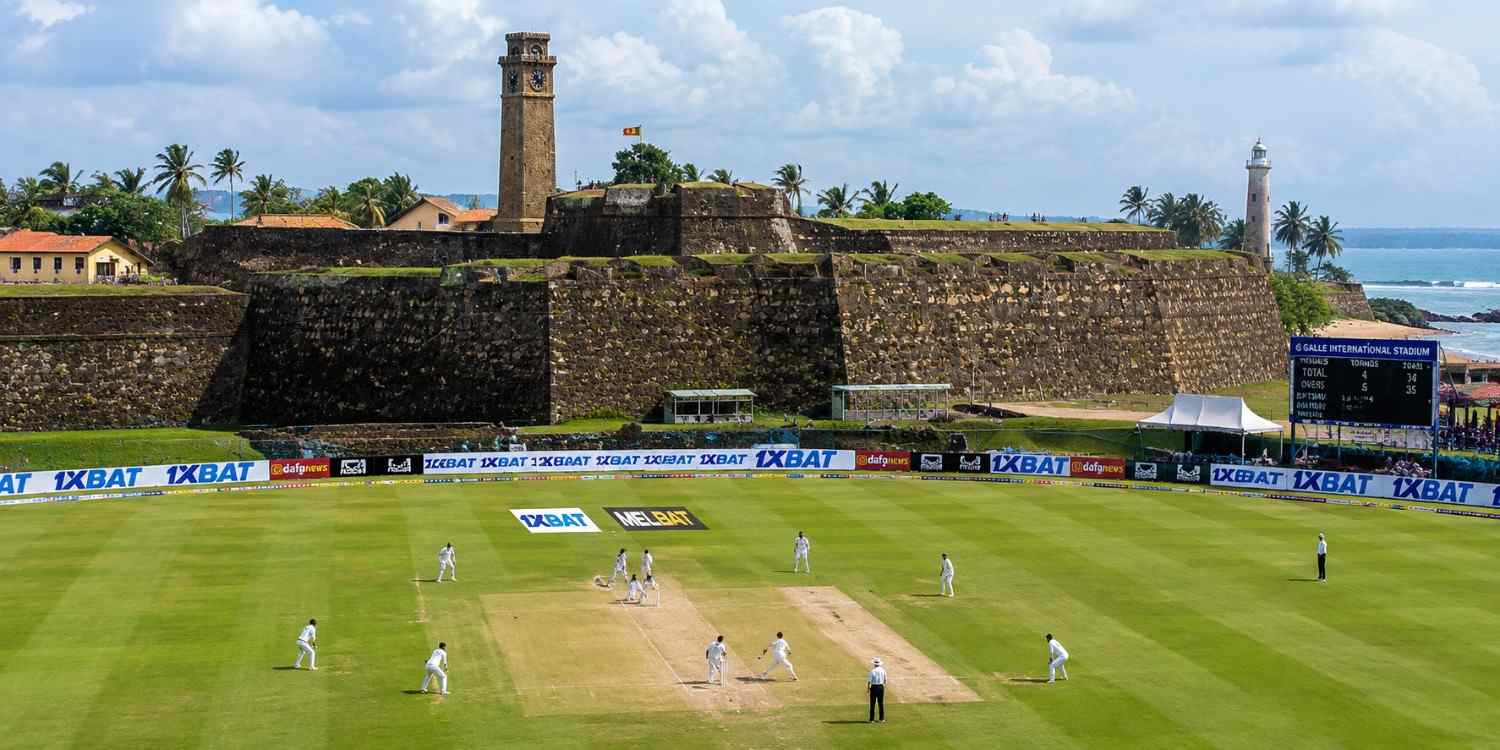
Few Test grounds place the game so visibly inside a city as Galle does. The Galle International Stadium Sri Lanka venue sits beside the old fort and the Indian Ocean, with a surface that can reward batting early before turn and variable bounce become harder to manage.
For cricket followers, the appeal runs well beyond the setting. This guide covers the ground’s permanent facts, pitch behavior, Test numbers, history, current fixtures, weather, tickets, and the practical details needed when planning a cricket visit.
Galle International Stadium Facts at a Glance
| Ground detail | Information |
| Location | Galle, Southern Province, Sri Lanka |
| Setting | Beside Galle Fort and the Indian Ocean |
| Original establishment | 1876 |
| Former name | The Esplanade |
| First-class debut | 1984 |
| First Test | Sri Lanka vs New Zealand, 1998 |
| Capacity | Approximately 35,000 |
| Ends | City End and Fort End |
| Floodlights | No permanent floodlights |
| Home club | Galle Cricket Club |
| Main international format | Test cricket |
How Did Galle International Stadium Become a Test Venue?
From Racecourse to Cricket Ground
The Galle International cricket ground history begins with a racecourse and public esplanade established in 1876. Cricket gradually became more prominent, with school matches recorded there in the late nineteenth century and a permanent grandstand appearing before the ground was formally recognized as a cricket stadium in 1927. A turf wicket followed in 1945, giving the venue a firmer cricketing identity.
First-Class and International Cricket
First-class cricket reached Galle in 1984. Further upgrades eventually brought the ground to international standards, and its first Test arrived in June 1998 against New Zealand. Sri Lanka made the opening match memorable by winning by an innings and 16 runs, giving Galle an emphatic introduction to Test cricket.
Destruction and Return After the Tsunami
The Indian Ocean tsunami of December 2004 devastated the stadium and surrounding area. In the weeks that followed, the damaged ground served as temporary shelter for displaced residents. Reconstruction began in 2006, with support arriving from Sri Lankan and international cricket circles. Test cricket returned in December 2007 when Sri Lanka hosted England at the rebuilt venue.
How Does the Pitch Behave at Galle?
Galle generally offers its best batting conditions early before spin and variable bounce become increasingly influential. The change develops across the match, with weather and preparation affecting how quickly the surface wears.
Batting Conditions During the First Two Days
A fresh surface can be productive once batters settle. Coastal humidity, cloud cover, or residual moisture may give seamers some movement early, but the first two days have also produced substantial totals when the pitch remains sound. Patience against the new ball can open a longer scoring window.
Spin Through the Middle of the Test
The contest changes as the surface dries and wears. Footmarks become more useful, the pace off the wicket can slow, and spinners gain greater scope to alter trajectory, speed, and release angle. Batters who use their feet decisively and keep the strike moving are better equipped to prevent bowlers from settling into one attacking pattern.
Fourth-Innings Batting
Late in the match, a sharper turn can arrive with uneven bounce, making defense less certain and scoring more difficult. Historical scoring falls steeply by the fourth innings, although Galle does not behave identically in every Test. Rain, pitch preparation, and the amount of earlier wear can all change the expected pattern.
Test Match Scores and the Advantage of Batting First
The innings averages show why captains place such value on first use of the surface. The pattern is strong historically, although individual Tests can move away from it.
| Test innings | Approximate historical average | Reading of conditions |
| First innings | 375 | Strongest general batting period |
| Second innings | 312 | Scoring remains possible as wear develops |
| Third innings | 239 | Greater assistance begins to appear |
| Fourth innings | 154 | Most difficult historical batting period |
Teams batting first have won 26 of the 49 completed Tests recorded at the venue, compared with 16 wins for teams batting second. A strong opening total can therefore create both scoreboard pressure and better access to the deteriorating surface later. Those figures describe history rather than a fixed par score, and weather can reduce the usual advantage.
Major Test Records at Galle International Stadium
The Galle International Stadium record picture is current through August 14, 2026, before the Sri Lanka-India Test begins. A new match can change totals and active-player figures, so this cutoff is important.
Team Records
| Category | Record |
| Highest total | Sri Lanka 704/3 declared vs Ireland, 2023 |
| Lowest total | South Africa 73 vs Sri Lanka, 2018 |
| Highest successful chase | Pakistan 344/6 vs Sri Lanka, 2022 |
| Lowest successfully defended target | Sri Lanka defended 168 vs Pakistan, 2009 |
| Completed Tests | 49 |
| Wins batting first | 26 |
| Wins batting second | 16 |
| Draws | 7 |
Individual Records
| Category | Record |
| Most Test runs | Mahela Jayawardene, 2,382 |
| Highest individual score | Chris Gayle, 333 |
| Most Test wickets | Muttiah Muralitharan, 111 |
| Best innings bowling | Muttiah Muralitharan, 7/46 |
| Best match bowling | Muttiah Muralitharan, 13/171 |
Historic Cricket Milestones at Galle
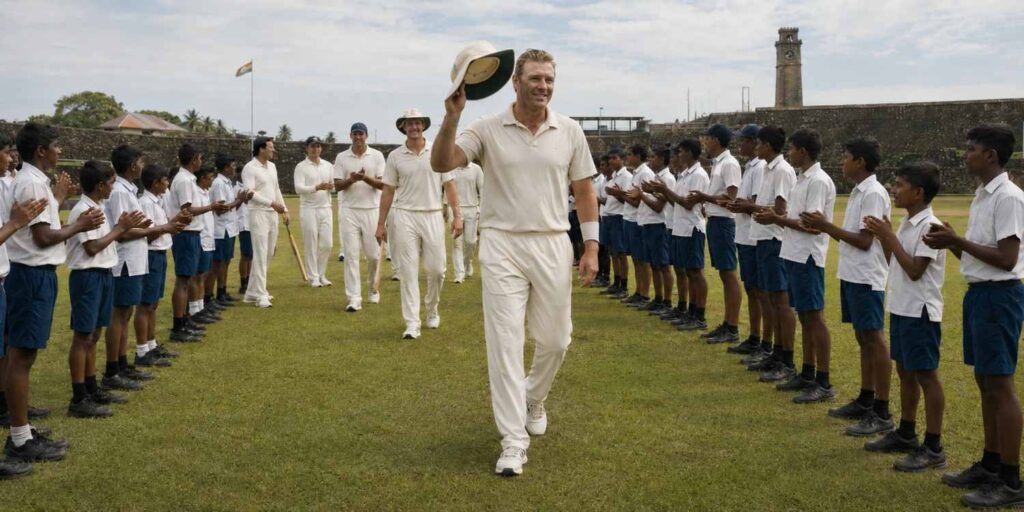
- Shane Warne reached 500 Test wickets in 2004.
He dismissed Hashan Tillakaratne during Australia’s Test at Galle, becoming the second bowler to reach the mark. Warne later supported efforts connected with rebuilding the tsunami-damaged ground. - Muttiah Muralitharan finished with 800 wickets in 2010.
He entered his final Test needing eight wickets and reached the landmark with his last Test dismissal, removing Pragyan Ojha. - Pakistan completed Galle’s record chase in 2022.
Set 342, Pakistan reached 344/6, with Abdullah Shafique batting through the pursuit for an unbeaten 160. - Steve Smith crossed 10,000 Test runs in 2025.
The Australian reached the milestone during the first Test at Galle and became the fifteenth batter in Test history to enter the 10,000-run group.
Upcoming Matches and Fixtures at Galle
The Galle International Stadium match schedule changes as Sri Lanka Cricket confirms international tours and domestic competitions. Readers checking Galle cricket ground fixtures should use the current Sri Lanka Cricket Match Centre or ICC fixture list rather than relying on an old stadium calendar.
Schedule last checked on August 14, 2026
| Date | Match | Competition | Start time | Status |
| August 15–19, 2026 | Sri Lanka vs India, 1st Test | ICC World Test Championship 2025–27 | 10:00 a.m. local | Upcoming |
Weather and Playing Conditions in Galle
Galle International Stadium weather reflects a warm, humid coastal climate where showers, cloud cover, and sea breeze can alter a day’s rhythm. Moisture may assist early movement before the surface dries, while rain interruptions can remove playing time without defining the entire match. A live forecast remains more useful than a long-term rainfall percentage when planning for a specific match day.
- Temperature: Warm conditions generally remain throughout the year.
- Rain: Short interruptions can reduce available playing time.
- Humidity: Moist air can increase fatigue and support early movement.
Tickets, Prices and Entry Information
A fixed Galle International Stadium tickets price does not apply to every fixture because admission changes with the series, match day, and spectator area. For the Sri Lanka-India Test beginning August 15, 2026, Sri Lanka Cricket has announced free public admission at Galle through Gate 4.
- Match-specific admission arrangements should be checked before travel.
- Entry gates can change between different cricket fixtures.
- Third-party prices should not be treated as official rates.
Planning a Cricket Tour to Galle
Searches for Galle International Stadium tour packages commonly extend beyond match entry, so the inclusions deserve a careful check before payment. A package may combine accommodation, local transfers, stadium transport, Galle Fort visits, guided sightseeing, and support during the cricket trip. Before booking, confirm whether match admission is included, where the hotel is located, how match-day transport works, what cancellation terms apply, and whether the operator’s credentials can be verified independently.
Read more about famous stadiums: Sawai Mansingh Stadium: Jaipur’s 2026 IPL Return, Pitch, Records and Match Guide
Galle International Stadium: A Ground Shaped by Cricket and History
Changing conditions are central to cricket at Galle International Stadium. The evolving pitch has contributed to batting and bowling records that, alongside the coastal setting, give each match a recognisable character. The ground has followed an equally distinctive path, developing from the Esplanade and returning after the tsunami as a defining Test venue. Attendees should verify current fixtures, tickets and weather.
FAQs
Does Galle host men’s T20 Internationals?
Galle is primarily a Test venue and has not hosted a men’s T20 International. The ground has staged men’s ODIs, women’s ODIs, and women’s T20 Internationals at different points in its international history.
Does Galle International Stadium have floodlights?
The ground does not have the permanent floodlighting used by regular day-night international venues. International cricket at Galle is therefore associated mainly with daytime play, with Test matches remaining its defining format.
What do the City End and Fort End mean?
City End and Fort End identify the two bowling ends used for match administration and commentary. The Fort End takes its name from the historic Galle Fort beside the cricket ground.
Can spectators watch cricket from Galle Fort?
Parts of Galle Fort can provide elevated views toward the cricket ground, although visibility varies by position. Spectators should still check local access rules and restrictions before relying on the fort for match viewing.
How far is Galle from Colombo?
Galle lies roughly 115 to 120 kilometers south of Colombo. Journey time can vary significantly depending on whether visitors travel by road, expressway, rail, or another transport option.