The best swing bowler in the world debate begins with Wasim Akram. He had pace, late movement, left-arm angle, reverse swing, yorkers, and control across Tests and ODIs. If cricket needs one all-time name for swing bowling, Akram remains the strongest answer.
The current answer is harder. James Anderson has retired from Test cricket, Trent Boult is no longer a full-time international across every format, and several modern fast bowlers use swing only as part of a wider skill set. Mitchell Starc, Jasprit Bumrah, Shaheen Afridi, Bhuvneshwar Kumar, Matt Henry, and Mohammed Shami all deserve space in the discussion.
The Verdict Depends on the Question
| Fan Question | Strongest Cricket Answer |
| Best all-time swing bowler | Wasim Akram |
| Best Test swing bowler by long career | James Anderson |
| Best reverse swing bowler | Wasim Akram |
| Best current left-arm swing threat | Mitchell Starc |
| Best current new-ball swing name from India | Mohammed Shami |
| Best Indian specialist swing bowler | Bhuvneshwar Kumar |
| Best current seam-and-swing bowler overall | Jasprit Bumrah |
A single answer can mislead readers. Akram leads the all-time list. Anderson owns the longest Test swing career among fast bowlers. Starc carries current left-arm danger. Bumrah is the best current fast bowler by wider skill, but his case includes seam, angle, yorkers, bounce, and control along with movement.
Why Wasim Akram Leads the All-Time List?
Wasim Akram swing bowling had variety that few fast bowlers ever matched. He could swing the new ball, reverse the old ball, attack with yorkers, bowl around the wicket, and change pace without losing threat.
His record gives the skill a strong base. Akram took 414 Test wickets and 502 ODI wickets for Pakistan. He became the first bowler to cross 500 ODI wickets and left a lasting mark on left-arm fast bowling.
His case rests on four cricket truths:
- He moved the ball both ways.
- He controlled swing at high pace.
- He used reverse swing as a weapon.
- He won matches across Tests and ODIs.
Akram’s bowling had danger even when the pitch looked flat. Batters could cover the straight ball, yet the late dip and tail into the stumps made him difficult to read.
James Anderson and the Art of Test Swing
James Anderson swing bowler debates work differently from Akram discussions. Anderson did not have Akram’s left-arm angle or ODI reach, but his Test career became the longest and richest swing-bowling body of work by a fast bowler.
Anderson finished with 704 Test wickets. His control in English conditions was famous, but he also improved abroad during the second half of his career. He used the seam upright, attacked both edges, and made batters play at balls they wanted to leave.
His swing craft came through details:
- Wrist position at release
- Seam presentation through the air
- Late movement after pitching
- Patient outside-off-stump lines
- Ability to return for another spell with the same threat
Anderson’s greatness was built through repetition. He could bowl six overs where nothing looked dramatic, then find the outside edge with a ball that moved a fraction.
The Current Best Swing Bowler in the World
The current best swing bowler in the world is not a simple pick because modern fast bowlers are rarely pure swing specialists. Teams want bowlers who can move the new ball, hit hard lengths, bowl yorkers, and survive flat pitches.
Mitchell Starc has the strongest current left-arm swing case. His fuller length, inswinging yorker, and ability to strike early keep him dangerous in Tests and ODIs. His record and longevity give him a stronger current case than most active left-arm quicks.
Jasprit Bumrah is the leading current fast bowler overall. His Test ranking, accuracy, awkward release, seam movement, and death bowling make him the strongest complete pace-bowling name. His movement is often seam-heavy rather than classical outswing alone, which is why he belongs in the wider swing-and-seam debate.
Shaheen Afridi remains a major new-ball swing name, especially when the left-arm angle brings the ball back into right-handers. Trent Boult remains a fine swing bowler, though his international workload has changed.
Best Swing Bowlers Across Generations
| Bowler | Country | Main Swing Strength |
| Wasim Akram | Pakistan | New-ball swing and reverse swing |
| James Anderson | England | Late swing and Test control |
| Waqar Younis | Pakistan | Reverse swing yorkers |
| Dale Steyn | South Africa | Outswing at high pace |
| Chaminda Vaas | Sri Lanka | Left-arm swing and accuracy |
| Trent Boult | New Zealand | New-ball left-arm swing |
| Mitchell Starc | Australia | Inswinging yorkers and pace |
| Bhuvneshwar Kumar | India | Two-way swing with new ball |
| Shaheen Afridi | Pakistan | Left-arm new-ball inswing |
| Mohammed Shami | India | Seam upright movement and accuracy |
This table separates swing identity from complete bowling greatness. Glenn McGrath, Malcolm Marshall, Curtly Ambrose, and Kagiso Rabada are elite fast bowlers, but this article keeps the lens on swing and movement.
Indian Names in the Swing Bowling Debate
India has produced several strong swing bowlers, but Bhuvneshwar Kumar swing bowler discussions remain important because he built his career around movement. He could swing the ball both ways, especially with the new white ball. His best spells often came through control rather than pace.
Bhuvneshwar took wickets across all three formats and became known for early breakthroughs, tight T20 spells, and a clean wrist position. He gave India a classical swing option during an era when the team’s pace attack was changing quickly.
Mohammed Shami deserves a different kind of praise. His seam position, wrist alignment, and full length have made him dangerous with both new and older balls. He is not always called a pure swing bowler, yet his movement through the air and off the surface has hurt elite batters.
Jasprit Bumrah gives India the highest current pace-bowling case. His swing is part of a bigger package. He brings seam, angle, yorkers, slower balls, bounce, and pressure from a release point that batters rarely face.
What Makes a Bowler a Great Swing Bowler?
Swing bowling in cricket is not only about making the ball curve. The bowler must control the movement late enough to beat the batter. Early swing is easier to see. Late swing creates doubt and edges.
A great swing bowler usually has these skills:
- Stable wrist position at release
- Upright seam through the air
- Control over fuller lengths
- Ability to move the ball both ways
- Patience to repeat the same channel
- Skill with new ball and old ball
- Smart use of crease angle
- Strong plan against left and right-hand batters
The best swing bowlers make batters play at balls they are unsure about. They make the front foot move early, then move the ball late.
Reverse Swing Changed Fast Bowling
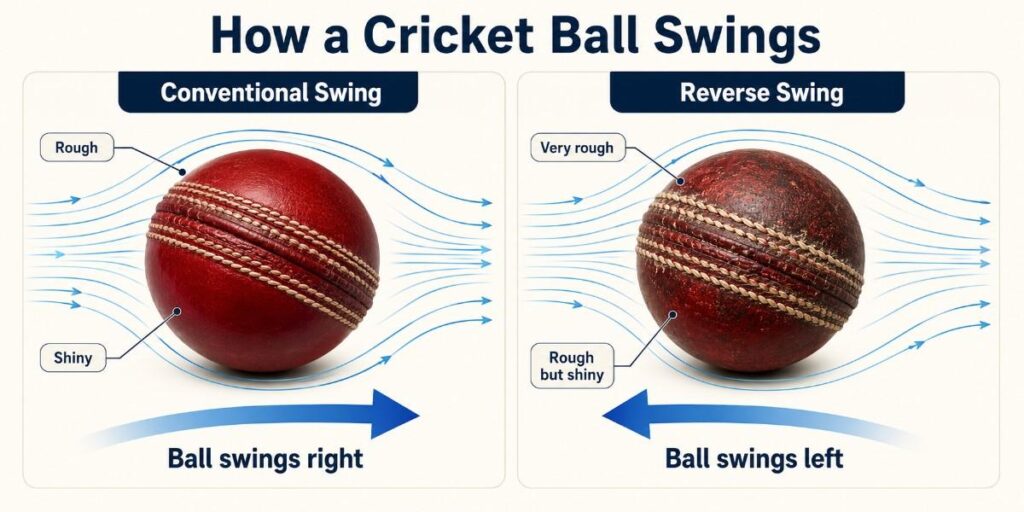
Best reverse swing bowler debates usually return to Wasim Akram and Waqar Younis. Reverse swing appears when the older ball moves late through the air, often toward the shin or stumps from a fuller length.
Akram used reverse swing with left-arm angle, which made right-handers protect both pads and off stump. Waqar turned reverse swing into a yorker weapon. His inswinging full balls attacked toes and stumps with brutal speed.
Reverse swing changed cricket because it gave fast bowlers a second life after the new ball lost shine. A batting side could survive the first spell, yet still face danger when the ball became old.
New Ball Swing Versus Old Ball Swing
A new ball usually swings because the seam and shine help air move differently around both sides. The bowler needs wrist control and seam position. Conditions such as cloud cover, humidity, and surface freshness can help.
Old-ball swing is different. Reverse swing needs wear, roughness, pace, and control. The ball may move late toward the stumps, and batters often see it very late.
The difference can be read like this:
| Swing Type | Main Phase | Main Threat |
| Conventional swing | New ball | Outside edge and lbw |
| Late outswing | New ball or older ball | Slip cordon chances |
| Inswing | New ball | Pads, stumps, inside edge |
| Reverse swing | Old ball | Yorkers, bowled, lbw |
| Contrast swing | Older ball | Late movement against set batters |
A bowler who controls both new-ball and old-ball movement enters a higher class. This is where Akram stands apart.
Format-Wise Picks for Swing Bowling
Test cricket gives swing bowlers time to work out batters. Anderson, Akram, Steyn, Boult, Shami, and Bumrah built strong cases because they could return for new spells and keep asking questions.
ODI cricket rewards early wickets. Akram, Starc, Boult, Vaas, and Shami have strong records because new-ball wickets can change the match before the middle overs begin.
T20 cricket is harsher. Swing bowlers get fewer balls and less time for setup. Bhuvneshwar, Shaheen, Boult, Starc, and Arshdeep Singh have shown how early movement can still win short-format overs.
Final Answer
The best swing bowler in the world across cricket history is Wasim Akram. His new-ball swing, reverse swing, left-arm angle, pace, and wicket record give him the clearest all-time case.
For Test swing bowling, James Anderson has the strongest long-career argument. Among current bowlers, Mitchell Starc leads the left-arm swing discussion, while Jasprit Bumrah leads the wider fast-bowling field through movement, accuracy, and complete skill. For India’s pure swing conversation, Bhuvneshwar Kumar remains the most natural specialist name.
FAQs
What is the main difference between swing and seam bowling?
Swing happens in the air before the ball reaches the pitch. Seam movement happens after the ball lands. Many fast bowlers use both, which makes the batter judge movement twice.
Why does the red ball swing longer than the white ball?
The red ball often keeps its lacquer and seam condition for a longer spell in Test cricket. White balls can lose movement faster because limited-overs cricket brings harder hitting and quicker wear.
Why do left-arm swing bowlers trouble right-hand batters?
Left-arm swing bowlers create a different release angle. The ball can start wide, move into the pads, or leave the batter late. This angle makes judgment harder from the crease.
What conditions help swing bowling most?
Cloud cover, humidity, fresh grass, a hard seam, and careful ball maintenance can help swing. Bowlers still need wrist control because helpful weather cannot replace skill.
Can a slower bowler swing the ball well?
A slower fast-medium bowler can swing the ball if the wrist and seam position are strong. Extra pace helps, but late movement and accuracy often create the wicket.