A huge target in ODI cricket changes the mood of a match. The chasing team has fifty overs, but the pressure arrives much earlier. One bad powerplay can make the chase look too large. One strong partnership can bring the dressing room back to life.
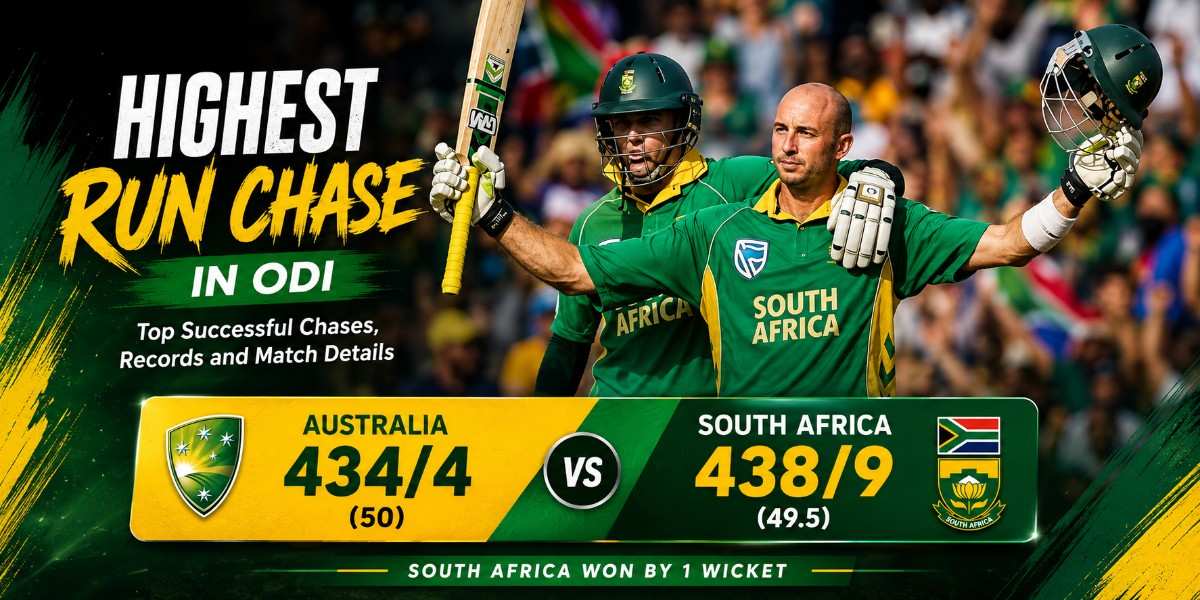
The highest run chase in ODI cricket remains South Africa’s 438/9 against Australia in Johannesburg in 2006. Australia had made 434/4, which already looked unreal at the time. South Africa answered with a chase that still stands above every other successful ODI pursuit.
This record has survived many changes in the format. Bat sizes have improved, fielding rules have changed, and modern batters attack from earlier in the innings. Even then, 438 has remained the mark everyone looks up to.
Highest Run Chase in ODI Cricket at a Glance
| Rank | Team | Score Chased | Opponent | Venue | Year | Result |
| 1 | South Africa | 438/9 | Australia | Johannesburg | 2006 | Won by 1 wicket |
| 2 | Netherlands | 374/6 | Scotland | Dundee | 2025 | Won by 4 wickets |
| 3 | South Africa | 372/6 | Australia | Durban | 2016 | Won by 4 wickets |
| 4 | England | 364/4 | West Indies | Bridgetown | 2019 | Won by 6 wickets |
| 5 | India | 362/1 | Australia | Jaipur | 2013 | Won by 9 wickets |
| 6 | South Africa | 362/6 | India | Raipur | 2025 | Won by 4 wickets |
| 7 | Australia | 359/6 | India | Mohali | 2019 | Won by 4 wickets |
| 8 | Australia | 356/5 | England | Lahore | 2025 | Won by 5 wickets |
| 9 | Pakistan | 355/4 | South Africa | Karachi | 2025 | Won by 6 wickets |
| 10 | New Zealand | 350/9 | Australia | Hamilton | 2007 | Won by 1 wicket |
How South Africa Created the 438 ODI Chase?
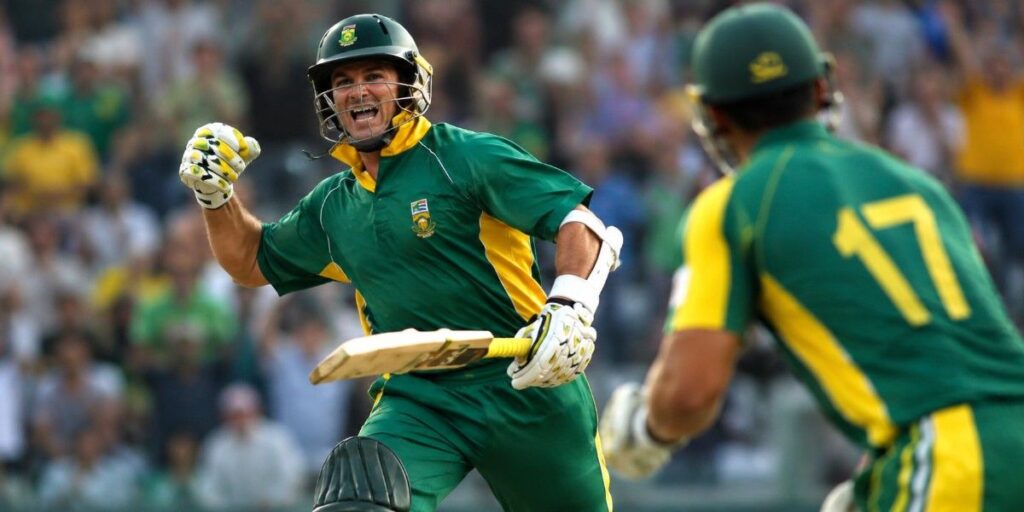
South Africa’s 438/9 was not a normal chase with a quiet build-up. It was a high-speed fight from both sides. Australia had already made the first 400-plus score in men’s ODI cricket, led by Ricky Ponting’s 164.
A target of 435 looked beyond reach, even at a batting-friendly Johannesburg ground. South Africa lost an early wicket, but Herschelle Gibbs changed the match. His 175 from 111 balls gave the chase its real force. Graeme Smith added 90, and Mark Boucher finished the match with an unbeaten fifty.
The match had every ingredient a record chase needs:
- A flat surface with true bounce
- A small margin for bowling mistakes
- A fearless top-order response
- A long middle-overs partnership
- Lower-order control near the finish
- One set batter present deep into the chase
South Africa reached 438/9 with one ball left. The final margin was one wicket, which made the record feel even tighter. It was a chase built on risk, timing, and nerve.
Why Does the 438 Chase Still Look Different?
Many teams have chased 350-plus in ODI cricket, but only South Africa have crossed 400 while batting second and won. This is why the ODI run chase record has remained untouched for two decades.
The difficulty comes from the required tempo. A team chasing 435 needs almost 8.7 runs per over across the innings. That rate cannot be left for the final ten overs. The chase needs pressure from the start, but early wickets can ruin everything.
Three things made the 438 special:
- South Africa attacked without losing the match plan.
- Gibbs turned a large target into a believable chase.
- Boucher handled the final overs without panic.
This is why the record is remembered as a full-team chase, even though Gibbs played the innings everyone talks about first.
Top Successful ODI Run Chases After 438
The second-highest entry belongs to the Netherlands, who reached 374/6 against Scotland in Dundee in 2025. Scotland had made 369/6, powered by George Munsey’s 191. Netherlands answered through Max O’Dowd’s unbeaten 158 and completed a landmark chase for Associate cricket.
South Africa appears again near the top. Their 372/6 against Australia in Durban in 2016 was a different type of chase. David Miller stayed unbeaten on 118 and gave the innings a controlled finish. It lacked the madness of Johannesburg, but it had excellent finishing skill.
England’s 364/4 against West Indies in Bridgetown in 2019 showed how quickly modern ODI cricket can change. England kept the required rate under control and won with six wickets left.
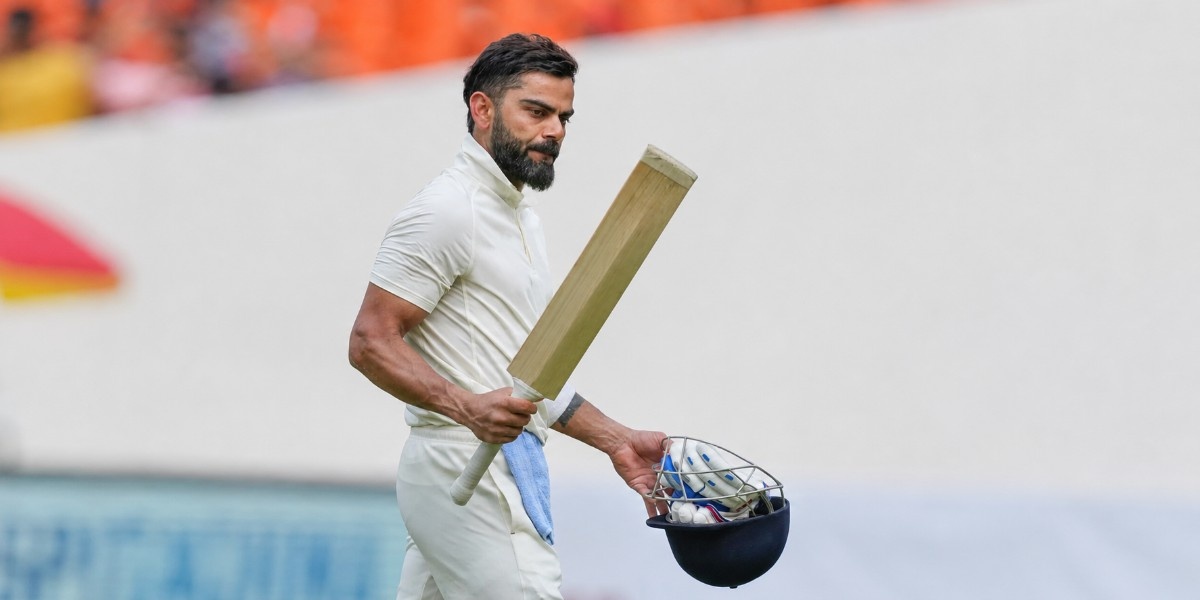
India’s 362/1 against Australia in Jaipur remains India’s best successful ODI chase. Rohit Sharma made 141 not out, and Virat Kohli scored an unbeaten hundred from 52 balls. India chased 360 with surprising ease and lost only one wicket.
India’s Highest Run Chase in ODI Cricket
India’s highest successful chase in ODIs is 362/1 against Australia in Jaipur in 2013. The target was 360, and India reached it in 43.3 overs.
The chase felt smooth because India had both control and acceleration. Shikhar Dhawan gave the start. Rohit Sharma batted through the innings. Virat Kohli then changed the speed of the chase with one of India’s fastest ODI hundreds.
The important details are clear:
- Opponent: Australia
- Target: 360
- Final score: 362/1
- Venue: Jaipur
- Year: 2013
- Main batters: Rohit Sharma and Virat Kohli
- Winning margin: 9 wickets
India’s chase remains special because it never looked desperate after the opening stand. The required rate was high, yet the batting made it look manageable.
Big ODI Chases Added in Recent Years
The list of the highest successful run chases in ODI cricket has changed quickly in recent years. The 2025 season added several major entries.
The Netherlands reached 374/6 against Scotland in Dundee. Australia chased 352 against England in Lahore during the Champions Trophy. Pakistan reached 355/4 against South Africa in Karachi. South Africa then chased 359 against India in Raipur and finished on 362/6.
These chases point toward a wider change in ODI batting. Teams now keep deeper batting lineups. Top-order batters take fewer overs to settle. Middle-order hitters can finish large targets without waiting too long.
Yet the 438 record remains distant. Chasing 350 has become possible on strong batting days. Chasing 435 still demands something rare.
What Makes a Big ODI Chase Work
A big chase is not only about hitting boundaries. Teams need a clean plan across fifty overs. The first ten overs decide whether the chase starts with belief or damage. The middle overs then decide whether the required rate becomes friendly or frightening.
Successful teams usually manage five things well:
- They avoid losing three early wickets.
- They keep one batter set for a long period.
- They attack the weaker bowlers quickly.
- They rotate strike during quiet overs.
- They leave a clear finish for the final ten overs.
Wickets in hand carry huge value. A team with seven wickets left after 35 overs can attack the death overs. A team with four wickets left may need to protect its tail.
Why 350-Plus Chases Are Becoming Common
ODI cricket has changed in the last fifteen years. Batters now carry T20 habits into fifty-over cricket. Power-hitting starts earlier. Teams bat deeper. Fielding restrictions give scoring chances when bowlers miss their line.
Several modern chases prove this shift:
- India’s 362/1 in Jaipur showed how quickly a target of 360 can shrink.
- England’s 364/4 in Bridgetown showed the value of fearless top-order batting.
- Netherlands’ 374/6 in Dundee showed Associate teams can enter the same record space.
- South Africa’s 362/6 in Raipur proved 350-plus chases can travel across conditions.
Even with this change, the best chases still need patience. A batter cannot swing blindly for fifty overs. The chase needs gears, not constant hitting.
Difference Between a High Second-Innings Score and a Successful Chase
The highest run chase in ODI list includes only winning innings. A team must pass the target and win the match. A large second-innings total in a defeat belongs to a different record.
This difference is important because some teams have scored huge totals while batting second and still lost. Those innings can be impressive, but they are not successful chases.
For this blog, the ranking follows one simple rule:
- The team batted second.
- The team passed the target.
- The team won the match.
- The final score decided the ranking order.
This keeps the list focused on completed chases, not near misses.
Conclusion
The highest run chase in ODI cricket is still South Africa’s 438/9 against Australia in 2006. The record remains huge because it asked for an impossible pace and still reached the finish with one ball left.
Modern ODI cricket has made 350-plus chases less shocking than before. Netherlands, Pakistan, Australia, India, England, and South Africa have all produced major successful chases in recent years. Yet 438 remains in its own bracket.
A great ODI chase needs power, planning, partnerships, and nerve. South Africa had all four in Johannesburg, and that is why the record still leads the table.
FAQs
What does run chase mean in ODI cricket?
A run chase begins when the team batting second tries to pass the first team’s score. In ODIs, the chase can last up to fifty overs unless the target is reached earlier.
How is the target calculated in an ODI chase?
The target is one run higher than the first-innings score. If a team makes 300, the chasing team needs 301 to win. Revised targets may apply when rain affects playing time.
Why are wickets important during a big ODI chase?
Wickets give the chasing team freedom to attack later. A side with set batters and wickets left can take risks during the final overs without exposing weaker lower-order players too early.
Can a tied ODI count as a successful run chase?
A tied ODI does not count as a successful chase in the regular innings because the target was not passed. A super over may decide the winner, but the chase itself finished level.
What type of batter is valuable in a large ODI chase?
A large chase needs one batter who can bat deep and another who can lift the scoring rate. The best chases usually mix boundary-hitting with steady strike rotation.