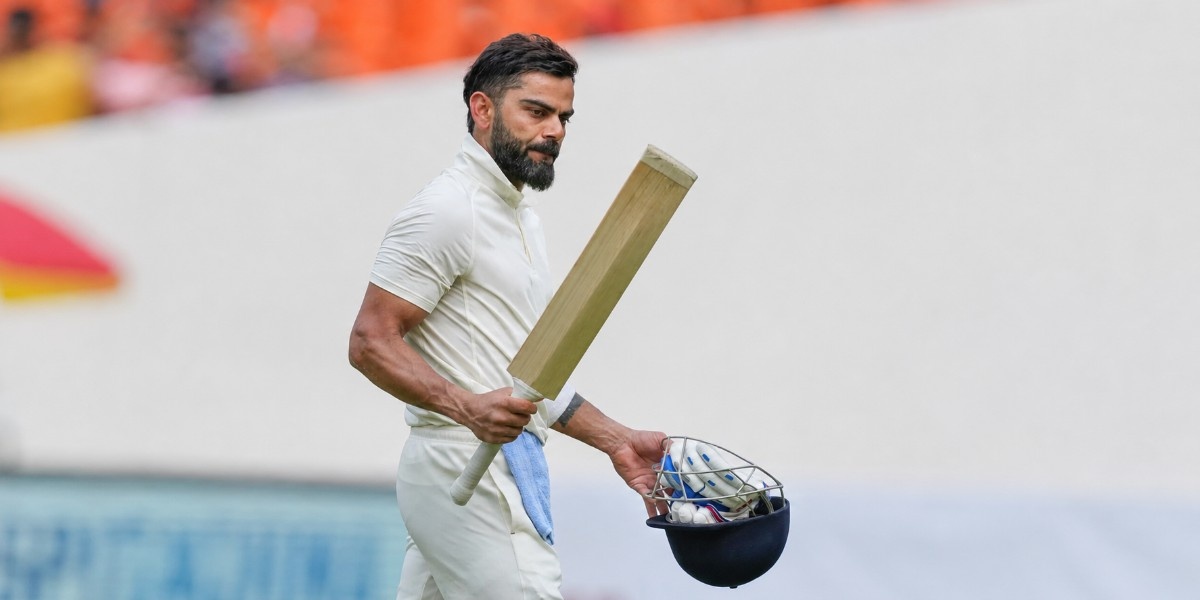
A glance at Virat Kohli’s batting is enough to raise an interesting question. How does he hit the ball so firmly while keeping his bat swing quick? This is usually what people want to understand when they search for Virat Kohli bat weight in kg.
His stroke play offers part of the answer. Kohli uses timing, wrist movement and a clean swing to generate power. He does not appear to depend on an unusually heavy blade. Bats made in a similar profile generally weigh between 1.16 kg and 1.22 kg.
That range is an estimate, not the confirmed weight of every bat he has carried. Some retail versions weigh about 1.13 kg, and certain player-profile bats reach 1.23 kg. A professional’s match bat is prepared by hand, so its final weight can change with the cleft, handle, grip, toe and edge shaping.
The Practical Weight Answer First
An estimated Virat Kohli bat weight of 1.16 kg to 1.22 kg places it in the medium-weight bracket. There is enough wood behind the ball for powerful shots, but the blade can still move quickly when he drives, flicks or makes a late adjustment.
| Detail | Practical Reading |
| Estimated weight range | Around 1.16 kg to 1.22 kg |
| Weight in grams | Around 1160 grams to 1220 grams |
| Bat type | English willow |
| Handle style | Short handle |
| Batting style fit | Timing, drives, flicks, and controlled power |
| Main strength | Balance and pickup rather than raw weight |
Kohli bats in situations that can change within a few overs. He might begin against a moving ball, work singles against spin and then look for boundaries later in the innings. Carrying a responsive bat makes those changes easier because he does not need to force every scoring shot.
Why Virat Kohli Does Not Need a Very Heavy Bat?
Putting extra wood into a blade can produce greater force at impact. There is a trade-off, though. Once a bat becomes difficult to lift, the batter may lose hand speed and reach the ball a fraction late.
That would work against several of Kohli’s strongest shots. His cover drive needs a smooth downswing. The flick depends on quick wrists, and the back-foot punch gives him little time to bring the bat through. None of these strokes benefits from a blade that feels slow.
A bat within the estimated range offers useful advantages:
- It keeps his downswing quick.
- It leaves room for late adjustments.
- It allows an immediate switch from defence to attack.
- It complements his wrist work through the leg side.
- It remains manageable across a long innings.
The reading on the scale tells only part of the story. Hold two bats of equal weight and one may feel much easier to swing. Where the wood sits along the blade has a direct effect on pickup, and that is likely to influence Kohli’s choice as much as the weight itself.
Virat Kohli Bat Weight in Grams and Pounds
Cricket bats are not always labelled in kilograms. Shops may use grams, while traditional bat measurements commonly appear in pounds and ounces. The table below converts the estimated Virat Kohli bat weight in grams and other commonly listed Kohli-profile weights.
| Weight in KG | Weight in Grams | Approximate Pounds and Ounces |
| 1.13 kg | 1130 grams | Around 2 lb 8 oz |
| 1.16 kg | 1160 grams | Around 2 lb 9 oz |
| 1.18 kg | 1180 grams | Around 2 lb 10 oz |
| 1.20 kg | 1200 grams | Around 2 lb 10.5 oz |
| 1.22 kg | 1220 grams | Around 2 lb 11 oz |
| 1.23 kg | 1230 grams | Around 2 lb 11.5 oz |
These conversions make different product listings easier to compare. They should not be mistaken for an official measurement of Kohli’s bat in a specific match. Any answer for Virat Kohli cricket bat weight has to allow for small differences between individually finished blades.
The Bat Profile Behind Kohli’s Timing
Weight receives plenty of attention, but a bat’s shape says much more about the way it is meant to play. Virat Kohli bat specifications are normally associated with a full English willow profile, substantial edges and a sweet spot set around the middle or slightly lower down the blade.
That configuration suits the strokes seen throughout Kohli’s career:
- His cover drive needs the face to remain steady through contact.
- His on-drive calls for balance as the bat travels through a straight arc.
- His flick relies on the blade responding quickly to his wrists.
- His back-foot punch requires a firm face behind the ball.
- His straight lofted shot benefits from a solid hitting area.
Loading too much wood into the toe could make the bat feel reluctant on the way down. Removing too much from the blade might improve speed but take some force out of the shot. A Kohli-style profile has to find a workable middle ground.
Why Balance Matters More Than Scale Weight?
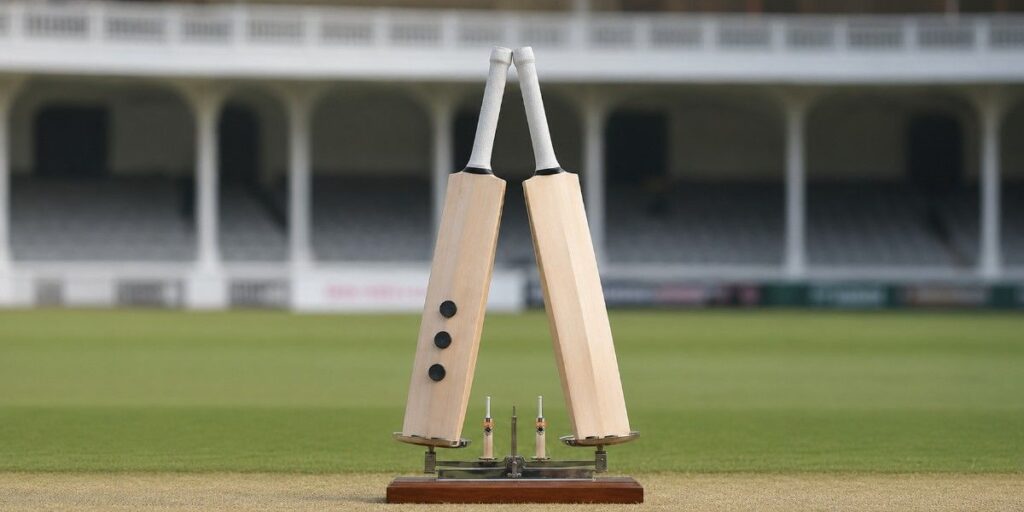
The number attached to Kohli bat weight cannot tell someone how the blade feels in motion. A bat may look heavy on paper and still lift beautifully. Another may be lighter on the scale but seem awkward as soon as the player takes guard.
Cricketers call this feeling pickup. It is affected by several parts of the bat:
- Handle weight
- Grip thickness
- Willow density
- Edge distribution
- Spine position
- Sweet spot placement
- Toe weight
Consider two bats weighing 1.20 kg. If the first carries too much wood low in the blade, it may pull at the hands during the downswing. Better distribution can make the second feel noticeably quicker, despite the identical scale reading. This is why experienced batters take practice swings before judging a bat.
Match Bat and Retail Bat Are Different
A signature bat sold in a shop resembles the player model, but it is not a duplicate of the bat taken onto the field. Checking a listed Virat Kohli MRF bat weight can help a buyer understand the general range. It cannot establish what Kohli used in a particular international or Indian Premier League innings.
His bats are selected and prepared for him. Each cleft has its own grain structure, density and natural response. Pressing and shaping then affect the finished blade. Add a particular handle and grip arrangement, and two similar-looking bats can end up feeling quite different.
The variation in online figures makes sense once this distinction is clear. Lighter retail models can appear near 1.13 kg, whereas other versions fall anywhere from 1.16 kg to 1.23 kg. Kohli’s own match equipment is likely to be adjusted until it gives him the pickup and response he wants.
Virat Kohli Bat Size and Willow Type
A full-size short-handle bat is the usual reference point when discussing Virat Kohli bat size. Most adult professional batters use this size, but that does not make every short-handle bat identical. Handle shape, blade length and other measurements can still be refined for the player.
Searches for Virat Kohli bat English willow also reflect the level of cricket he plays. Quality English willow offers a strong response from the bat face without demanding unnecessary weight. When properly pressed and prepared, it gives a skilled batter the rebound needed to make clean timing count.
Can Young Players Use the Same Bat Weight?
Copying the estimated weight is not necessarily the best way for a young batter to copy Kohli. The bat still has to suit the player holding it. Age, height, physical strength and technique all affect what can be controlled comfortably.
A 1.18 kg bat may feel lively in the hands of a strong academy batter. Give the same model to someone with less developed wrists and the downswing could become slow. The player may then compensate by using too much bottom hand or swinging across the line.
A few simple checks can prevent that mistake:
- The bat should lift smoothly from the normal stance.
- The downswing should reach the ball without feeling delayed.
- The bottom hand should not take over each stroke.
- The player should remain comfortable when defending quicker bowling.
- A long net session should not leave the arms unusually tired.
Many school players will time the ball better with a lighter blade. There is little value in matching a professional’s estimated weight if the bat interferes with basic movement.
How to Choose a Kohli-Style Bat?
Someone looking for a Virat Kohli bat profile should begin with the pickup, then consider the number on the scale. Buying from a specification alone is risky because the same stated weight can feel different from one blade to the next.
Use this simple check:
- Wear batting gloves before picking up the bat.
- Shadow a straight drive and then play a flick.
- Notice if the blade drops into either stroke late.
- Go through several forward defensive movements.
- Lift the bat with one hand to judge its balance.
- Put it down if ten swings already leave the arms tired.
Do not be swayed by how substantial a bat feels during the first lift. The better test is whether it remains controlled across repeated movements. A suitable blade will come through without dragging and will let the batter meet the ball under the eyes.
Final Take on Virat Kohli’s Bat Weight
There is no verified public figure that applies to every bat Virat Kohli uses. The sensible answer for Virat Kohli bat weight in kg remains an estimated 1.16 kg to 1.22 kg. Retail bats based on his profile may sit just outside that range.
The number is still less important than it first appears. Kohli’s batting requires a blade with quick pickup, dependable balance and enough wood behind the hitting area. Young players can learn something useful from that preference, but they do not need to duplicate the weight. A bat they can control for an entire innings will bring them closer to his method than a heavy model chosen for the name attached to it.
FAQs
Does an extra grip increase cricket bat weight?
Yes, adding another grip increases the overall weight. Depending on its material and thickness, a grip may add roughly 40 to 60 grams. Since it sits on the handle, it can also change how the bat picks up.
What does pickup mean in a cricket bat?
Pickup is the way a bat feels when lifted or swung. It is different from scale weight because the distribution of wood affects movement. A well-balanced bat may feel light in the hands despite having a higher measured weight.
Is a lighter bat better for timing?
It can be better for a player who struggles to complete the downswing on time. Still, a lighter blade will not repair every timing problem. Head position, balance, hand speed and regular batting practice remain important.
Does knocking-in change bat weight?
Knocking-in should not alter the weight by any noticeable amount. Its purpose is to compress the willow fibres and prepare the face and edges for impact, reducing the chance of early damage from a hard cricket ball.
Should beginners use a Kohli-style bat?
Only if they can swing it comfortably and maintain control. A full-size Kohli-style bat may be too demanding for a beginner with developing wrists and forearms. Bat size and pickup should suit the player’s current ability.